

Earwax Removal.
Safe, gentle clearing of built-up earwax by a licensed provider. Relieve plugged ears, muffled hearing, and discomfort without the risks of at-home cotton swabs.
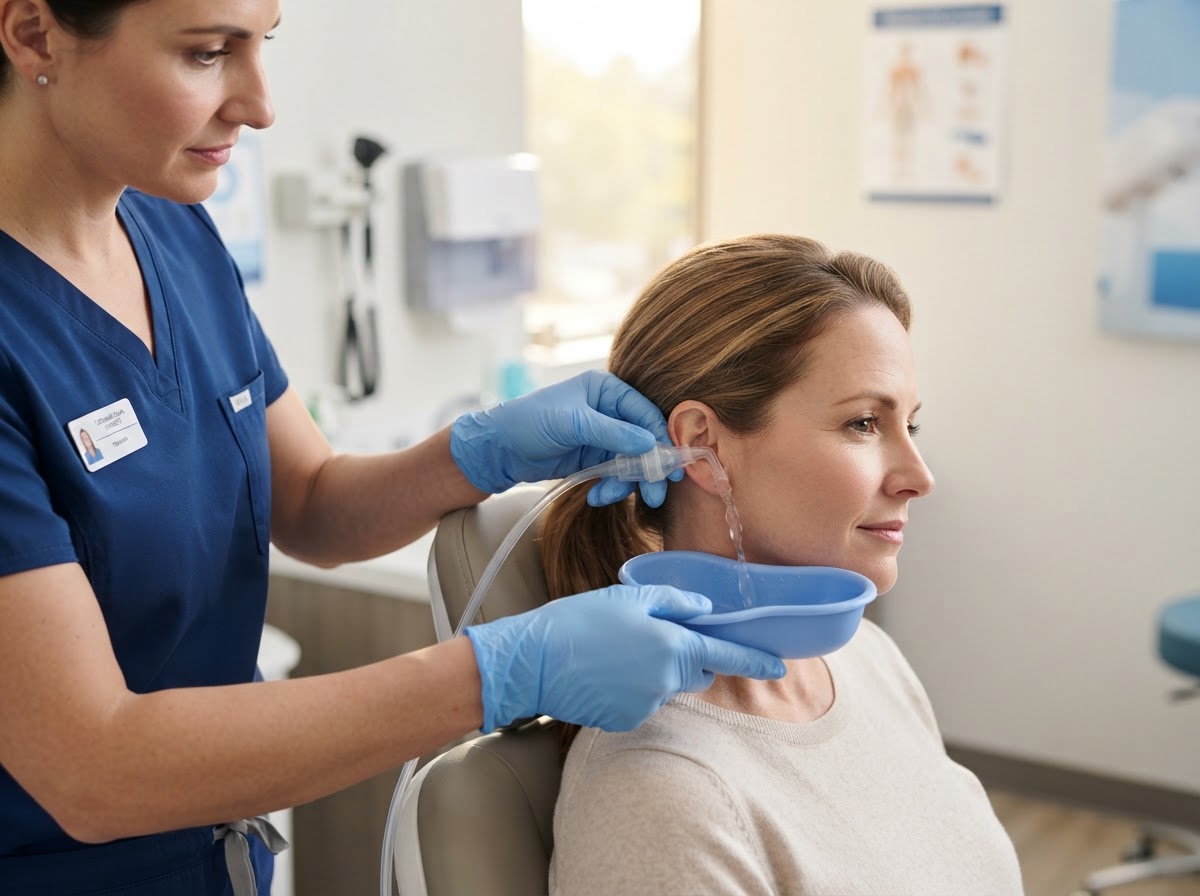
When clearing your ears needs a professional touch.
Earwax protects and lubricates the ear canal, but buildup can muffle hearing and cause discomfort. A licensed provider clears it safely — without pushing it deeper.
- Muffled hearing or a sudden plugged sensation
- Ear fullness, pressure, or mild discomfort
- Ringing in the ear (tinnitus) linked to buildup
- Wax accumulation from hearing aid use or cotton swabs
- Pre-travel clearing or post-cold congestion relief
A calm, straightforward visit.
Otoscope Evaluation
Your provider examines the ear canal with an otoscope to confirm wax impaction and rule out infection or other causes of your symptoms.
Gentle Clearing
Built-up cerumen is softened and cleared using gentle warm-water irrigation, with manual removal instruments used when appropriate.
Comfort Re-check
Your provider re-examines the canal, confirms it is clear, and reviews safe at-home ear care to help prevent future buildup.
Earwax Removal
Otoscope exam, gentle warm-water irrigation, and manual cerumen removal by a licensed provider, with a hearing and comfort re-check after clearing.
Earwax Removal FAQs
Answers about comfort, timing, and at-home care.
Most patients feel little to no discomfort. Warm-water irrigation and gentle manual removal are well tolerated. If you have a sensitive ear canal or a history of eardrum issues, tell your provider so they can adjust the approach.
A typical earwax removal visit takes about 15 to 30 minutes, including the otoscope exam, clearing, and a comfort re-check. More impacted cases may require a short softening period before clearing.
We recommend avoiding cotton swabs, which can push wax deeper. You may use a gentle over-the-counter softening drop a day or two before your visit, but it is not required — your provider can soften the wax in office.
Yes. Both ears can be evaluated and cleared during a single appointment. Your provider will talk with you before treating the second ear.